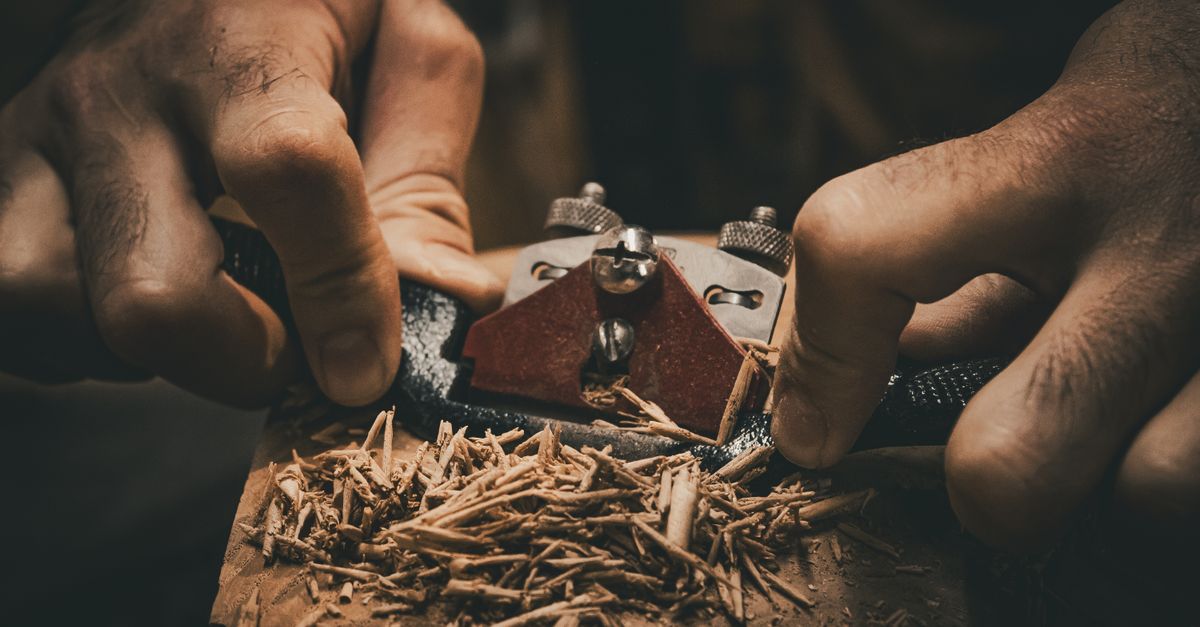
Short notes on the kind of work that moves through the workshop: fitted cupboards, freestanding islands, shopfitting counters and older solid-wood pieces that come in for repair. Each entry is a working scenario drawn from the commissions we take on, not a client testimonial.
Cupboards around awkward walls
Scenario: a bedroom run in an older house where the ceiling drops along one wall and the plaster is uneven. Carcasses are scribed on site before doors are hung, so gaps stay tight without packing strips. Oak frames with reclaimed Oregon pine shelving keep the visible grain consistent across the run.
Result: a fitted run that reads as part of the room rather than a box pushed against it.
A working island, not a showpiece
Scenario: a freestanding ash island for a kitchen extension, sized to leave clear walkways on both sides. The base carries a painted back panel and open ends for trays and boards; the top is a laminated ash block finished with a food-safe oil that can be refreshed at home.
Result: a surface that takes daily chopping and still clears knees on the seating side.
A counter built for daily trade
Scenario: a service counter for a coffee bar, framed heavier than a domestic unit because it has to carry a commercial machine and a till. Stainless sits over a ply substrate, while the front is solid oak, oiled rather than varnished so it darkens with use.
Result: cable runs routed through the back legs and a removable panel for grinder wiring, keeping the front face clean.
Repair over replacement
Scenario: an inherited Oregon pine dining table with a split top and legs repaired badly decades earlier. The table is taken apart, old joints cleaned, and the top re-glued with matching pine inserts instead of epoxy filler. A thin oil and wax finish leaves the dents and water marks in place.
Result: a usable table where the wear still reads as part of the piece.
Saturday morning at the bench
Scenario: a three-hour hand-tool session capped at six people so everyone gets time at the sharpening stone. The group starts with a plane iron, moves to sawing to a line, and finishes with a small joint to take home. Timber comes from offcuts of current commissions, so the material varies week to week.
Result: beginners leave with a set-up they can repeat on their own bench.
Timber chosen before the first cut
Scenario: a commission where the material direction is settled before milling starts. Oak, ash and reclaimed Oregon pine behave differently under a plane and take finish in their own way, so the stock list is checked against what the piece actually needs.
Result: fewer surprises at the bench and a finish that suits the timber rather than fighting it.