How the bench runs a commission

Every job that comes through the studio passes the same five stages, whether it is a run of fitted cupboards or a single inherited table. The names on the paperwork change; the sequence does not.

  1. Stage 01

    Enquiry lands and gets sorted

    A request arrives with the type of work, the timber direction and a description of the piece or space. One of the three cabinetmakers reads it and decides which bench it belongs to: fitted work, freestanding pieces, counters, or restoration. If the description is thin, the first reply asks for the missing detail before anything is measured.

  2. Stage 02

    Planning and stock check

    Before a board is cut, the job is planned against what is actually on the rack. Oak, ash and reclaimed Oregon pine move in and out of the running stock list, so the plan is written around the boards that are there, not the ones we wish were. Drawings, cutting lists and the finish schedule are agreed internally at this point.

  3. Stage 03

    Bench work

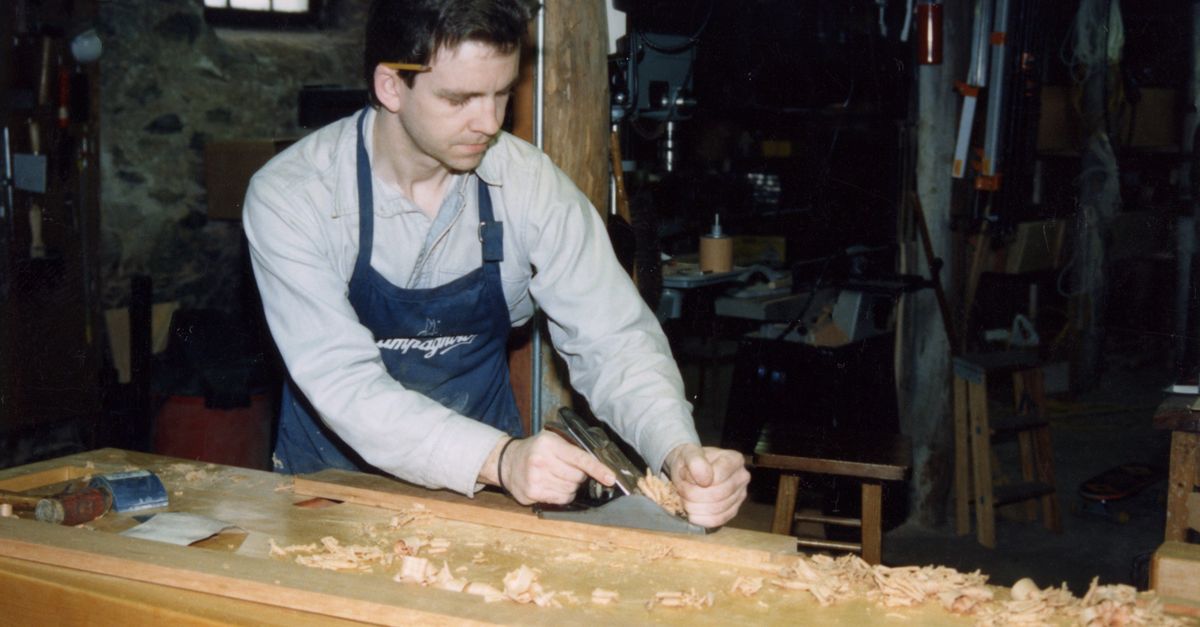
    Milling, jointing and assembly happen at the bench. Carcasses are squared, joints are cut to fit the timber in hand, and restoration pieces are stripped back to sound wood before anything is added. Whoever started the job stays on it through this stage, so the decisions made at the drawing board carry through to the cut.

  4. Stage 04

    Finishing and internal check

    Surfaces are sanded, oiled or waxed according to the agreed schedule, then left to settle before the piece is looked over. A second pair of hands checks the doors, drawers, joints and edges against the original brief. Anything that does not sit right goes back to the bench rather than out the door.

  5. Stage 05

    Handover

    The finished piece is packed, labelled and handed over with the notes that matter: which finish was used, how to refresh it, and what to avoid. For fitted work, the final fix happens on site. For restoration, the original hardware and any removed parts go back with the piece.

  6. Between jobs

    Small runs and Saturday sessions

    When commissions allow, the same bench time goes into small production runs of timber pieces. Saturday morning hand-tool sessions for beginners are capped at six people, which keeps the sharpening stone and the bench free for everyone in the room.

Four strands of work, one bench

Commissions come in different shapes, and each one is priced and planned on its own terms. What stays the same is where the work happens: a site visit somewhere in Gauteng first, then milling, jointing and finishing at the bench in Johannesburg.

Below is how the four main strands differ, what each one usually involves, and which one to pick when you send an enquiry. If your job sits between two of them, say so in the details and we will route it to the right bench.

Built-in cupboards

Fitted runs for bedrooms, passages and studies, built around the room rather than dropped into it. Carcasses are scribed on site where walls are out of true, and doors are hung after the frame is set.

  • Solid oak or ash frames, reclaimed Oregon pine for internal shelving
  • Shallow shaker panels or flat doors, hardwax oil finish
  • Soft-close hardware without a slab-front look

Request a quote for cupboards

Kitchen islands

Freestanding pieces with their own joinery, so they can be moved later without pulling out a fitted kitchen. Sized around walkway clearance and the way you actually use the surface.

  • Ash or oak base, painted back panel, open end shelving
  • Laminated block top, food-safe oil that can be refreshed at home
  • Seating overhang planned so knees clear the frame

Request a quote for an island

Shopfitting counters

Service counters for retail and hospitality interiors, built heavier than a domestic unit because they take daily trade. The front can still read as timber rather than shop equipment.

  • Solid oak or ash front, oiled so it darkens with use
  • Stainless worktop over a ply substrate where required
  • Routed cable runs and removable access panels

Request a quote for a counter

Restoration and small runs

Older solid-wood furniture that gets repaired rather than replaced: split tops, loose legs, joints that were fixed badly years ago. Alongside this, the studio runs small batches of timber pieces.

  • Re-jointing and re-gluing with matching timber inserts
  • Thin oil and wax finishes that leave wear and patina in place
  • Small production runs in oak, ash or reclaimed Oregon pine

Request a quote for restoration

Not sure which strand your job belongs to? Send the details and we will tell you.

See how a commission moves from site visit to bench Check the current timber stock list

What the bench takes on

Four strands of work run through the studio: fitted cupboards, freestanding islands, counters for retail interiors, and repair of older solid-wood pieces. Most jobs begin with a site visit somewhere in Gauteng, then move to the bench for milling, jointing and finishing.

Tycoon Workshop: service list

Timber stock moves between oak, ash and reclaimed Oregon pine. If you want to see what is on the rack before booking, the running list sits alongside the notes on resources.

  • Built-in cupboards

    Made to fit a specific room, not a standard opening. Carcasses are scribed on site where walls run out of square, then doors are hung at the bench. Oak and ash frames, reclaimed Oregon pine for internal shelving.

  • Kitchen islands

    Freestanding pieces with their own joinery and finish, built to leave clear walkways and seating clearance. Laminated block tops are oiled so they can be refreshed at home rather than sent back to the workshop.

  • Shopfitting counters

    Service counters for retail and hospitality interiors, sized to the space and to how the counter gets used day to day. Heavier frames, worktops suited to trade, and cable runs kept out of sight behind removable panels.

  • Furniture restoration

    Older solid-wood pieces that people inherit and would rather keep. The work is re-jointing, repair and re-finishing, not wholesale remaking, so wear and marks stay where they belong.

  • Small production runs

    Alongside one-off commissions, the studio builds short runs of timber pieces. Batch sizes stay small enough that each unit is still fitted and finished by hand. If you want to know how a run is scheduled around commission work, the process notes cover the sequence from site visit to bench.

What the bench takes on, and what it does not

Tycoon Workshop is a Johannesburg joinery studio run by three cabinetmakers. We split our time between client commissions and small production runs, and we would rather say clearly where a job fits than take on work we cannot do well.

Inside the scope

  • Built-in cupboards made to fit a specific room, in oak, ash or reclaimed Oregon pine.
  • Freestanding kitchen islands with their own joinery and finish, built to move rather than to be fixed.
  • Shopfitting counters for retail and hospitality interiors, sized to the space and to how the counter is actually used.
  • Restoration of older solid-wood furniture: re-jointing, repair and re-finishing rather than wholesale remaking.
  • Small production runs of timber pieces alongside commission work.

Outside the scope

  • Sheet-goods carcasses and melamine flat-pack assembly. We work in solid timber, not board.
  • Structural building work, plumbing, electrical connections and tiling. Those stay with your own trades.
  • Upholstery, caning and metalwork. We can point you to the right trade, but we do not do it in-house.
  • Full remaking of a piece where the original material can be saved. Restoration means repair first.
  • Volume runs and fixed production schedules. Small batches only, fitted around commission work.

What we need to confirm before quoting

Most jobs start with a site visit across Gauteng, because rooms and old furniture rarely match a drawing. Before we can give you a straight answer, we need to know the type of work, the timber direction if you already have one, and a description of the piece or space, including rough dimensions and current condition. For restoration, it helps to know what you want kept: original patina, old repairs, water marks and dents are decisions, not defaults.

Timber availability is a real constraint. We keep a running stock list on the site so you can see what is on hand before booking, and reclaimed Oregon pine in particular comes in whatever lengths and widths the salvage gives us. If a piece needs a specific section size, we will say so early rather than after the first cut.

What counts as a commission, and what does not

A few working definitions, so nobody arrives at the bench with the wrong idea about scope, materials or timing.

Fitted work means fitted to your room

Built-in cupboards and shopfitting counters are made to the actual space, not to a standard module. Old brick walls, dropped ceilings and uneven plaster are normal in Johannesburg houses and retail units, and each carcass is scribed on site before doors or fronts are hung. If a wall is out by 30 mm, the cupboard follows the wall, not the drawing.

Restoration is repair, not remaking

When we take on an inherited solid-wood piece, the aim is to keep what is already there. That usually means cleaning old joints, re-gluing a split top with matching timber inserts, and re-finishing with oil and wax. Dents, water marks and worn edges stay unless you ask otherwise. We will tell you plainly when a repair will not hold and a replacement part makes more sense.

Timber is what is on the stock list

The workshop works mainly in oak, ash and reclaimed Oregon pine. Reclaimed stock varies in width, colour and nail marks from board to board, so two pieces built from it will never match exactly. The running stock list shows what is currently on the racks. If a species is not listed, it is not in the workshop, and we will say so rather than promise a delivery date we cannot control.

Small runs are small on purpose

Alongside client commissions, the studio builds short production runs of timber pieces. These are limited by bench time and by what the three cabinetmakers can finish by hand, so quantities stay modest and repeat runs may differ slightly in grain and dimension. A production run is not a factory order, and it does not replace a commission slot.

Site visits cover Gauteng only

Most jobs begin with a site visit somewhere in Gauteng, because measurements taken from a photograph are rarely reliable. Work outside the province can still be discussed, but it is handled without an on-site assessment, and the client carries the risk of any dimension that turns out to be wrong.

Saturday sessions are capped at six

The beginner hand-tool sessions run on Saturday mornings and stop at six people, so everyone gets time at the sharpening stone and the bench. The timber used is offcuts from current commissions, which means the material changes from week to week. A session is a class, not a commission, and it does not reserve bench time for a later project.
A note about your visit

We use a small amount of local storage to remember how you responded to this notice. It keeps the banner from appearing on every page you open. Nothing is shared with third parties, and you can change your mind later by clearing your browser data.

Read the full details in our privacy policy.